2026 Best Aluminium Washroom Door for Global Buyers?

Time:2026-09-30 Author:Oliver
0%

Choosing the 2026 best Aluminium Washroom Door requires more than comparing catalogue prices. Global buyers must examine corrosion resistance, hardware quality, maintenance needs, and installation conditions. A humid hotel bathroom, a busy airport, and a coastal resort demand different specifications. One door cannot solve every project.

Professor Michael F. Ashby, a leading materials-selection expert, writes, “Materials are the stuff of design.” His principle fits every Aluminium Washroom Door decision. Aluminium offers low weight, strong corrosion resistance, and flexible surface finishes. Anodized aluminium can provide a clean metallic appearance. Powder coating creates broader colour options. However, poor pretreatment may cause early surface failure. Details matter.

Look closely at the frame, hinges, locks, ventilation gap, and edge protection. Check whether the supplier uses suitable aluminium alloys, consistent wall thickness, and tested hardware. Ask for coating information, dimensional tolerances, cleaning guidance, and replacement-part availability. These details reveal manufacturing experience. They also reduce surprises after installation.

Global buyers should compare delivered cost, not only the factory quotation. Shipping damage, local fitting, spare parts, and import procedures can change the final budget. Sustainability deserves attention too. Aluminium is highly recyclable, but responsible sourcing and efficient production still matter. This is where many comparisons remain incomplete.

A practical 2026 specification should balance appearance, privacy, accessibility, durability, and repairability. The cheapest door may look attractive today. It may not remain economical after thousands of daily openings. A better question is simple: will this Aluminium Washroom Door perform reliably in the buyer’s actual climate, traffic level, and maintenance system?
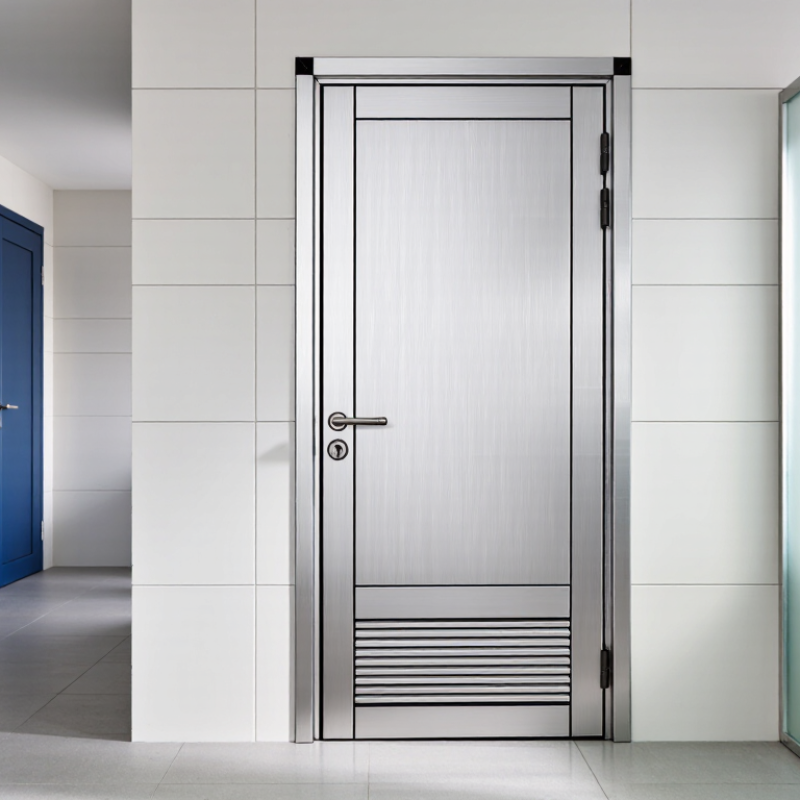
2026 Best Aluminium Washroom Door for Global Buyers?

What Is an Aluminium Washroom Door?

An aluminium washroom door is a door system made with a lightweight aluminium frame, an aluminium or composite panel, hinges, seals, and suitable hardware. It is designed for humid spaces where timber may swell, crack, or absorb moisture. The frame usually has a protective coating, while the panel can include a smooth, textured, or laminated surface.

In practical use, aluminium doors are easy to clean and resist everyday corrosion. A well-fitted door opens smoothly, closes quietly, and leaves enough clearance below the panel for ventilation. Moisture-resistant hinges and privacy locks are important details. Poor hardware can fail before the door does. Global buyers should check panel thickness, frame strength, surface treatment, packing quality, and installation instructions before ordering.

Aluminium is not flawless. Thin panels may dent under hard impact, and dark finishes can show scratches more clearly. Uneven floors may also cause rubbing at the bottom edge. I have found that accurate measurements matter more than attractive samples. The opening width, wall condition, drainage layout, and cleaning routine should guide the final specification. Buyers should also confirm local building, fire safety, accessibility, and hygiene requirements, because washroom standards differ between markets. A reliable supplier should provide material details, inspection records, and clear warranty terms without hiding maintenance limits.

Why Choose Aluminium Washroom Doors in 2026?

Why Choose Aluminium Washroom Doors in 2026?

In busy washrooms, aluminium doors handle humidity, frequent cleaning, and daily impact. Their lightweight frames reduce installation effort. Powder-coated or anodized surfaces also offer consistent protection against stains and surface corrosion. Installers often prefer aluminium because doors remain easier to align after repeated use. However, poor hinges or weak corner joints can still cause early failure.

The International Aluminium Institute reports that recycling aluminium can require about 5% of the energy used for primary production. This supports circular material planning for large renovation projects. The UNEP 2023 Global Status Report for Buildings and Construction states that buildings and construction created about 37% of global energy and process-related emissions in 2022. Choosing durable doors may reduce replacement waste, but aluminium is not automatically sustainable. Buyers should check recycled content, coating life, and local recycling access.

Tips: Request test evidence for corrosion resistance, coating adhesion, and cycle durability. Specify stainless-steel hardware for wet zones. Confirm frame tolerances before ordering. A low price can hide thin profiles and expensive maintenance. Also compare the door’s full service life, not only its purchase cost.

Key Features of the Best Aluminium Washroom Doors

2026 Best Aluminium Washroom Door for Global Buyers?

The best aluminium washroom door balances moisture resistance, strength, privacy, and easy maintenance. Aluminium frames should use corrosion-resistant alloys with accurately welded or mechanically joined corners. Poor joints often collect water and develop stains.

A durable door needs a stable infill panel, sealed edges, and reliable hinges. Compact laminate, coated panels, or reinforced aluminium sheets can suit busy washrooms. Choose stainless steel hardware when humidity remains high. Powder coating offers color flexibility, while anodizing gives a harder metallic surface. Both finishes require proper surface preparation.

Privacy also depends on design details. A floor gap should support ventilation without exposing the interior. Full-height panels provide stronger privacy, but they may complicate cleaning and airflow. Rounded edges reduce dirt buildup and improve safety. Check the latch by opening it repeatedly before installation. Small alignment errors become irritating every day.

From practical project experience, drainage and wall conditions matter as much as the door itself. Even a well-made door can fail against standing water or uneven flooring. Measure the opening twice, especially in renovation projects. Buyers should request finish samples, hardware specifications, and testing information before ordering. No door is perfect. The right choice depends on climate, traffic, cleaning methods, and local installation conditions.

2026 Best Aluminium Washroom Door for Global Buyers? – Key Features of the Best Aluminium Washroom Doors

Key Feature Recommended Specification or Benchmark Why It Matters for Washroom Applications What Global Buyers Should Verify
Aluminium Frame Material Architectural aluminium alloy such as 6063-T5 or an equivalent corrosion-resistant grade. Aluminium alloys used for architectural applications are lightweight, formable and suitable for humid indoor environments. Request the alloy designation, temper information and material documentation from the supplier.
Door Leaf Thickness Typical target: 1.2–2.0 mm aluminium sheet or profile wall thickness Adequate thickness improves rigidity and reduces the risk of dents, vibration and premature deformation. Confirm the thickness at several points, especially around hinges, locks and the bottom edge.
Standard Door Height Common finished door heights are approximately 1,980–2,100 mm, subject to local building practice. A suitable height supports privacy, ventilation and compatibility with standard washroom layouts. Check the finished opening size, floor clearance and headroom before production.
Door Width Common single-door widths are approximately 600–900 mm; accessible layouts may require wider clear openings. Correct width improves user comfort and helps meet accessibility requirements where applicable. Use the required local accessibility standard rather than relying only on nominal door width.
Surface Finish Anodized finish or architectural powder coating applied to a clean, pretreated aluminium surface. A quality finish improves resistance to moisture, stains, cleaning chemicals and everyday abrasion. Ask for the finish type, colour code, coating thickness range and surface preparation method.
Anodizing Performance For anodized surfaces, a coating thickness of about 10–15 micrometres is commonly used for architectural applications. Thicker, uniform anodic films generally provide better protection and more consistent appearance. Verify coating thickness using a suitable non-destructive measurement method and inspect colour consistency.
Powder-Coating Performance A uniform cured coating commonly falls within approximately 60–120 micrometres, depending on the system and profile design. Properly cured powder coating helps protect the aluminium from humidity, cleaning products and surface wear. Request coating-system information and check adhesion, cure quality, coverage and colour uniformity.
Moisture and Corrosion Resistance Non-porous aluminium surfaces with sealed joints, protected hardware and effective drainage details. Washrooms expose doors to water vapour, splashes and frequent cleaning, making joint design as important as the metal itself. Inspect lower corners, fasteners, thresholds, sealants and areas where water could collect.
Hardware Material Corrosion-resistant stainless steel or appropriately protected aluminium for hinges, screws, locks and handles. Hardware often fails before the door panel when exposed to moisture, salts and aggressive cleaning chemicals. Confirm hardware material, fastener grade, load rating and suitability for wet or high-humidity interiors.
Privacy and Ventilation Privacy lock, controlled bottom clearance and, where required, discreet ventilation gaps or grilles. Washroom doors must balance visual privacy with airflow and odour control. Review the lock indicator, gap dimensions, ventilation arrangement and local privacy requirements.
Door Operation Smooth opening and closing with adjustable hinges, reliable latch engagement and controlled alignment. Frequent daily use requires stable operation and reduces maintenance caused by sagging or misalignment. Test the door through repeated opening and closing cycles and inspect hinge adjustment range.
Fire-Safety Classification Do not assume an aluminium washroom door is fire-rated; a certified fire-door assembly is required where regulations demand it. Fire performance depends on the complete tested assembly, including leaf, frame, seals, hardware and installation. Request a valid fire-test or certification document for the exact door configuration if fire resistance is required.
Cleaning and Hygiene Smooth, sealed surfaces with minimal dirt traps and compatibility with neutral or manufacturer-approved cleaners. Simple-to-clean surfaces support hygiene and reduce staining, odour retention and maintenance time. Obtain cleaning instructions and verify resistance to the disinfectants used at the installation site.
Installation Tolerance Frame and opening dimensions should be measured accurately, with allowances for plumb, level and floor conditions. Correct installation prevents rubbing, uneven gaps, water-related damage and premature hardware wear. Provide an approved shop drawing and confirm site measurements before fabrication.
Service Life Considerations A durable door should combine corrosion-resistant materials, replaceable hardware and accessible adjustment points. Lifecycle cost depends on maintenance, spare-part availability and ease of repair, not only the initial purchase price. Confirm warranty terms, replacement hardware availability, maintenance intervals and technical support arrangements.

How to Select the Right Door for Global Projects

2026 Best Aluminium Washroom Door for Global Buyers?

How to Select the Right Door for Global Projects

Selecting an aluminium washroom door for an international project requires more than comparing prices. Begin with the building’s location, humidity, cleaning routine, and expected traffic. A coastal hotel may need stronger corrosion resistance than an office in a dry climate. Check the aluminium alloy, surface treatment, hinges, locks, and fasteners together. One weak component can shorten the whole door’s service life.

Measure carefully.

Site conditions often change after approval. Confirm opening sizes, wall thickness, floor levels, and installation access before production. For public facilities, choose hardware that is easy to operate and replace locally. Rounded edges, stable hinges, and smooth surfaces can improve daily safety and maintenance. Request technical drawings, material declarations, test records, and installation instructions. These documents help architects, contractors, and inspectors review the same information.

Do not trust appearance alone. A clean finish may hide poor alignment or unsuitable hardware. Ask how the door performs after repeated cleaning, impact, and moisture exposure. Regional building rules may also differ, especially for accessibility, fire separation, and ventilation. Local professionals should verify compliance before ordering. A cheaper door can become expensive when spare parts are delayed or installers lack guidance. Even experienced teams sometimes overlook small details, such as door swing clearance or compatible screw materials. That mistake is worth reviewing before shipment.

Installation, Maintenance, and Compliance Considerations

2026 Best Aluminium Washroom Door for Global Buyers?

Installation, Maintenance, and Compliance Considerations

A reliable aluminium washroom door begins with accurate site measurements. Measure twice. Check wall plumb, floor level, opening width, and finished tile thickness before fabrication. Experienced installers leave small movement tolerances because buildings shift slightly with heat and moisture. The frame should be fixed to solid substrates, not loose tiles or weak partitions. Use corrosion-resistant screws and compatible sealants. Moisture wins. Poor alignment can cause dragging, loose hinges, and privacy gaps within months.

Select hinges, locks, and handles for frequent public use. Rounded edges reduce snagging risks, while a visible occupancy indicator improves privacy. Door clearances should support local accessibility requirements, including turning space and handle reach. Requirements differ between countries and building types. Ask a qualified local professional to verify dimensions, emergency access, ventilation, sanitation, and fire-related provisions where applicable. Do not assume a standard door passes every inspection. Keep records.

Maintenance is simple, but it must be consistent. Wipe aluminium surfaces with mild detergent and clean water. Avoid abrasive pads and strong chemicals that may damage the finish. Inspect hinge screws, latch operation, seals, and floor clearances each month in busy facilities. Replace damaged hardware early. A useful improvement is a dated inspection log with photos. It exposes recurring problems, although staff may forget to complete it. Test doors after cleaning, not only during installation. Small defects become expensive when ignored.

2026 Aluminium Washroom Door Planning: Accessibility Reference Widths

Minimum clear opening widths differ by jurisdiction. Use these reference values during installation planning, then confirm the adopted local code, door hardware projection, threshold design, and site-specific accessibility requirements.

For installation, verify the finished clear opening after the frame, hinges, locks, closers, and seals are fitted. For maintenance, inspect hinges, latches, door closers, seals, fixings, and surface damage regularly; keep the door leaf aligned and replace worn hardware promptly.

Reference values: ADA Standards for Accessible Design—32 in (813 mm); UK Approved Document M—775 mm effective clear width; AS 1428.1—850 mm clear opening; EN 17210—800 mm reference clear opening. Local regulations and project classifications may require different values.

FAQS

Why are aluminium washroom doors suitable for busy facilities?

They handle humidity, frequent cleaning, and daily impacts. Their lightweight frames can simplify installation. They are not damage-proof.

How do aluminium surfaces resist stains and corrosion?

Powder-coated or anodized finishes provide consistent surface protection. However, harsh chemicals and abrasive pads may damage the finish.

Are aluminium washroom doors environmentally sustainable?

Aluminium can support circular material planning when recycled content and local recycling are available. Sustainability is not automatic.

What should buyers check before ordering?

Request evidence for corrosion resistance, coating adhesion, and cycle durability. Compare service-life costs, not only the purchase price.

Which hardware suits wet washroom areas?

Choose corrosion-resistant hinges, locks, handles, screws, and compatible sealants. Stainless-steel hardware is often practical in wet zones.

How should installers measure the opening?

Check wall plumb, floor level, opening width, and finished tile thickness. Measure twice. Small movement tolerances can prevent future alignment problems.

What installation mistakes can cause early failure?

Weak partitions, loose tiles, poor hinges, and weak corner joints can create dragging or privacy gaps. Moisture wins.

How can facilities maintain aluminium washroom doors?

Wipe surfaces with mild detergent and clean water. Inspect hinges, latches, seals, and clearances monthly. Keep a dated photo log.

What accessibility and safety details require attention?

Verify handle reach, turning space, clearances, ventilation, sanitation, and emergency provisions with a qualified local professional. One standard does not fit every building.

How can buyers avoid choosing a poor low-cost door?

Check profile thickness, hardware quality, coating life, and maintenance needs. A cheaper door may become expensive after repeated repairs.

Conclusion

An Aluminium Washroom Door is a practical, durable solution for commercial, institutional, hospitality, and residential washroom projects. In 2026, aluminium doors are increasingly valued for their resistance to moisture, corrosion, warping, and daily wear. Their lightweight construction supports smooth operation, while flexible finishes, modern designs, and customizable sizes make them suitable for different architectural styles. The best options should combine strong frames, reliable hardware, privacy-focused configurations, easy cleaning, and effective protection against humid environments.

For global buyers, selecting the right Aluminium Washroom Door requires careful attention to project location, traffic level, opening dimensions, surface treatment, accessibility needs, and local building requirements. Buyers should also confirm installation details, hardware compatibility, ventilation considerations, and product documentation before ordering. Proper installation helps ensure alignment, stability, and long service life, while routine cleaning and timely hardware checks preserve appearance and performance. A well-selected door should balance durability, hygiene, safety, design flexibility, maintenance efficiency, and overall project value.

Oliver

Oliver

Oliver is a seasoned marketing professional with a wealth of expertise in driving brand awareness and engagement. With a deep understanding of our company's product offerings, he consistently delivers high-quality content that enriches our professional blog. His insights not only shed light on......