Choosing the right Aluminum Bathroom Door involves more than comparing colors and prices. A door may look elegant in a showroom, yet perform poorly beside daily steam, splashing water, and damp towels. The best choice should match your bathroom’s layout, ventilation, moisture level, and household routine.
Begin with accurate measurements. Check the opening width, wall condition, swing direction, and available clearance. Even a few millimeters can affect installation. Select aluminum with a durable protective finish, especially for humid coastal areas. Powder coating and anodizing can improve surface resistance, but product quality varies. Review the manufacturer’s specifications instead of trusting attractive descriptions alone.
Pay close attention to hinges, seals, handles, and glass compatibility. These small parts often determine whether the door closes quietly or develops leaks and stains. A professional installer can identify uneven walls, weak fixing points, and drainage concerns before problems appear. Local building requirements may also influence safety glass, ventilation, and door clearances.
A reliable Aluminum Bathroom Door should feel stable, open smoothly, and remain easy to clean. Look for tested materials, clear warranties, and documented installation guidance. Cheap hardware is rarely a bargain. Still, no checklist is perfect. Personal habits matter, and a busy family bathroom may need stronger components than a rarely used guest bathroom. The following guide compares practical features, common mistakes, maintenance needs, and long-term value, helping you choose with evidence rather than appearance alone.
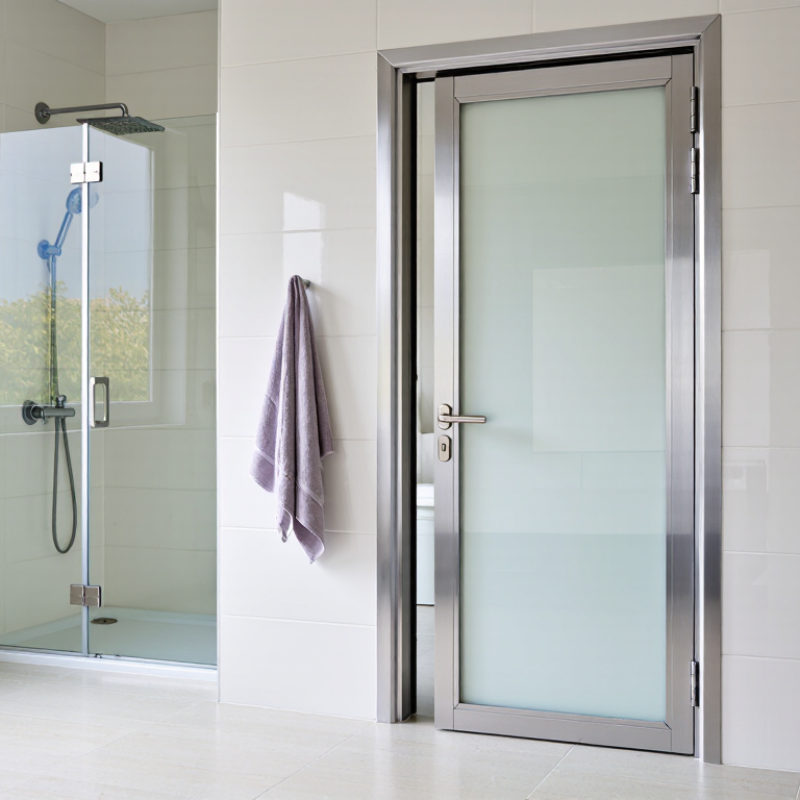
Choosing the best aluminum bathroom door starts with the room, not the finish. Measure the opening width, height, and wall thickness at several points. Floors and walls are rarely perfectly level. Record the smallest measurement. This prevents an attractive door from becoming a daily problem. Decide how the door should move. A sliding panel saves space, while a hinged door needs clear floor area. Check whether towels, toilets, or cabinets may interfere.
Bathroom conditions also shape the door specification. Aluminum suits humid rooms because it resists swelling and routine corrosion when properly finished. Still, water can enter through weak seals. Inspect the shower spray direction and mark the wet zone. Safety glass, suitable seals, and a slight floor slope help control splashes. Ask an experienced installer to check the substrate, especially around tile edges. Hollow or poorly supported walls may need reinforcement before fixing the frame. Ventilation matters too. Persistent condensation can affect hardware over time.
Before ordering, confirm that the opening is finished, not merely framed. Include tile thickness, trim, thresholds, and uneven corners. I once measured from one side only. The replacement panel fit poorly, and the mistake was avoidable. Recheck every figure, preferably with another person. Request drawings showing swing direction, fixing points, clearances, and drainage gaps. Do not assume a standard size will match an older bathroom. Small adjustments are cheaper before delivery than after installation. Leave room for cleaning around hinges, tracks, and bottom seals.
Aluminum grade affects strength, surface stability, and long-term corrosion performance. For most bathroom door frames, 6063 aluminum offers clean extrusion lines and reliable corrosion resistance. Its smooth finish also suits narrow profiles and detailed door designs.
Choose 6061 when the frame needs higher structural strength or heavier hardware. For sheet panels, 5052 aluminum is a practical option because it resists moisture and bends well. However, alloy numbers alone do not guarantee durability.
Poor drainage can damage even a suitable grade. Water trapped inside the lower frame often causes more trouble than ordinary bathroom humidity.
Anodizing creates a hard oxide layer that resists scratches and daily moisture. It usually performs well around sinks and showers. Powder coating provides more color choices and can protect the metal effectively when applied over a properly prepared surface.
Inspect the coating around cut edges, screw holes, and corners. These small areas are easy to miss. In coastal homes, chloride-rich air demands greater caution.
Select a finish tested for humid or marine conditions, and check the supplier’s salt-spray data rather than trusting a vague “rust-proof” claim. Door hinges and screws also need compatible, corrosion-resistant materials.
A mismatched fastener can create staining through galvanic corrosion. I would not choose appearance first.
A beautiful finish means little if water cannot drain from the threshold. Regular cleaning with mild soap helps, while harsh chemicals may weaken the protective surface.
Choosing the best aluminum bathroom door starts with the room’s layout, not appearance alone. Sliding doors suit narrow bathrooms because they need no swing space. Hinged doors feel familiar and provide a wider opening, but they need clear floor space. A folding door can help in compact rooms, although its hardware may require more cleaning.
Measure the finished opening at the top, middle, and bottom. Walls are rarely perfectly straight. Use the smallest width when checking the frame size, and leave practical clearance for installation. For glass, choose tempered safety glass from a qualified supplier. Clear glass makes a small bathroom feel larger, while frosted or textured glass offers more privacy. Thicker glass often feels sturdier, but it also adds weight and may require stronger hinges.
The opening direction matters. A door should open toward a safe, unobstructed area, never into a toilet or tight corner. Check handle clearance, shower positioning, and emergency access before ordering. This detail is easy to overlook. I have seen attractive doors become inconvenient because the swing blocks a towel rail. Recheck the measurements before drilling.
Tips
Mark the swing arc on the floor with masking tape. Stand inside the bathroom and test the movement. Also inspect the aluminum finish, seals, drainage path, and hinge quality. A low-maintenance door still needs regular cleaning, especially around the bottom track. Real bathrooms are imperfect, so allow small adjustments during installation.
How to Choose the Best Aluminum Bathroom Door?
A good aluminum bathroom door should control water before it creates hidden damage. Check the seal around the frame, hinges, and bottom edge. Flexible silicone or rubber seals should sit evenly without gaps or crushed sections. Run a finger along each joint. Small breaks can allow spray to reach the wall or floor. A raised threshold may improve water control, but it can become a tripping point for children or older users.
Hardware deserves close attention in daily use. Choose corrosion-resistant hinges, screws, and handles designed for wet environments. The handle should feel secure, even with wet hands. Test the closing movement several times. It should not scrape, slam, or require excessive force. Soft-closing hardware can reduce noise and protect the frame, though cheaper mechanisms may lose smoothness over time. I once overlooked hinge alignment during installation, and the seal wore unevenly within months.
Safety details should match the bathroom’s users. Consider rounded edges, stable frames, and panels that resist shattering if glass is included. Confirm that any glass meets recognized safety requirements in your area. Avoid doors that block the exit when opened inward. Maintenance is simple but not optional: wipe standing water from the bottom track, clean seals monthly, and inspect loose screws. Harsh cleaners may stain aluminum or weaken rubber. A practical inspection takes five minutes. Still, installation quality often matters as much as the door itself.
This 100-point evaluation model prioritizes the factors that most affect bathroom-door performance. Seals should limit water and air leakage, hardware should resist corrosion, safety features should reduce injury risks, and maintenance requirements should remain practical for long-term use. Check the manufacturer’s technical specifications and local building requirements before purchasing.
Choosing the best aluminum bathroom door requires more than comparing listed prices. In renovation work, I have learned that material quality becomes obvious after months of humidity, cleaning, and daily use. Look for corrosion-resistant aluminum, strong corner joints, and a smooth protective finish. A lightweight door can still feel solid when its frame is properly reinforced.
Cost deserves careful judgment. A cheaper door may use thin profiles, weak hinges, or poor seals. These details can cause rattling, water leakage, and early replacement. Measure the opening accurately, including wall unevenness and floor slope. Small errors become expensive during installation. I once underestimated an uneven wall, and the final adjustment took longer than expected.
Warranty terms should be practical, not merely impressive. Check coverage for peeling finishes, hardware failure, water seals, and frame defects. Ask whether labor is included and who handles service requests. Professional installation also matters. An experienced installer can level the frame, set correct gaps, and seal joints without blocking drainage paths. Request an itemized quotation covering the door, delivery, accessories, removal, and installation. It may feel overly cautious. It is not. Keep photos and measurements before work begins, because clear records make later discussions more reliable.
| Door Option | Typical Material and Construction | Estimated Door Cost | Water and Corrosion Resistance | Expected Service Life | Typical Warranty | Installation Support | Best For | Overall Value |
|---|---|---|---|---|---|---|---|---|
| Basic Aluminum Door |
Entry Level Standard aluminum frame, powder-coated or anodized finish, basic hinges and latch, usually with a solid or frosted panel. |
$120–$250 | Good resistance to normal bathroom humidity. More likely to show coating wear if exposed to standing water, harsh cleaners, or poor ventilation. | 8–12 years with regular maintenance | 1–2 years is common | Usually supplied as a ready-to-install unit. Professional fitting may be available separately; site measurement is often limited. | Rental properties, budget renovations, utility bathrooms, and low-traffic areas. | ★★★☆☆ |
| Standard Powder-Coated Aluminum Door |
Balanced Choice Medium-weight aluminum profile with durable powder coating, adjustable hinges, moisture-resistant seals, and a reinforced lock area. |
$250–$500 | Very good for typical residential bathrooms. Powder coating helps protect the aluminum surface from moisture and everyday abrasion. | 12–18 years with proper care | 3–5 years is common | Professional measurement, delivery, frame leveling, silicone sealing, and hardware adjustment are commonly available. | Most family homes and renovation projects where cost, durability, and appearance must be balanced. | ★★★★★ |
| Thermally Improved Aluminum Door |
Enhanced Performance Aluminum frame with a thermal-break or insulated profile, multi-point sealing, improved drainage details, and higher-grade hardware. |
$450–$850 | Excellent moisture protection when correctly installed. The improved frame design can reduce condensation and help maintain a more stable interior surface temperature. | 15–25 years with proper care | 5–10 years may be available | Strong installation support is recommended, including accurate opening measurement, drainage inspection, professional sealing, and final adjustment. | High-humidity bathrooms, premium residential projects, coastal areas, and bathrooms with ventilation or condensation concerns. | ★★★★☆ |
| Aluminum Door with Tempered or Laminated Glass |
Design Focused Aluminum frame combined with safety glass. Frosted, textured, or translucent glass improves privacy while allowing natural or borrowed light. |
$350–$750 | Good resistance when edge seals, glazing beads, and drainage channels are correctly fitted. Glass requires regular cleaning to prevent water spotting. | 12–20 years with maintained seals and hardware | 3–7 years is common; glass coverage may differ from frame coverage | Professional installation is important for safe glass handling, accurate alignment, correct gasket placement, and reliable water sealing. | Modern bathrooms, compact spaces, ensuite rooms, and projects requiring privacy with improved light transmission. | ★★★★☆ |
| Heavy-Duty Aluminum Door |
High Traffic Thicker profiles, reinforced corners, commercial-grade hinges, stronger latch hardware, and a more durable surface finish. |
$550–$1,000 | Excellent when the finish, fasteners, seals, and drainage details are designed for frequent cleaning and heavy moisture exposure. | 18–30 years with scheduled maintenance | 5–10 years is common | Comprehensive support may include site survey, opening preparation, professional installation, hardware testing, and maintenance guidance. | Hotels, dormitories, public facilities, rental complexes, and high-use residential bathrooms. | ★★★★☆ |
Measure the finished opening at the top, middle, and bottom. Record width, height, and wall thickness. Use the smallest measurement. Recheck with another person.
Sliding doors suit narrow bathrooms because they need no swing space. Hinged doors offer a wider opening but need clear floor area. Check towels, toilets, and cabinets first.
Mark the swing arc with masking tape. Stand inside the bathroom and test the movement. The door should not hit a toilet, cabinet, or towel rail.
Choose tempered safety glass from a qualified supplier. Clear glass can make a small room feel larger. Frosted or textured glass provides more privacy. Thicker glass may need stronger hinges.
Inspect the shower spray direction and identify the wet zone. Use suitable seals, drainage gaps, and a slight floor slope. Weak seals can still allow water through.
Ask an experienced installer to inspect the substrate. Hollow walls or weak tile edges may need reinforcement. A frame cannot stay secure on poor support.
Not always. Older walls may be uneven, and tiles can change the opening size. Include tile thickness, trim, thresholds, and uneven corners before ordering.
Clean the bottom track, hinges, seals, and drainage path regularly. Persistent condensation can affect hardware. Folding doors may need extra cleaning. Maintenance is easy to underestimate.
Choosing the best Aluminum Bathroom Door starts with understanding your bathroom’s layout, moisture levels, available space, and installation conditions. Measure the opening carefully and consider whether the door will be exposed to frequent water, limited ventilation, or uneven walls. Compare aluminum grades and protective finishes to find a solution with strong corrosion resistance, lasting appearance, and suitable performance for a humid environment. You should also select a practical door style, accurate size, appropriate glass type, and opening direction that support comfortable movement and efficient use of space.
Pay close attention to seals, hinges, handles, locks, and other hardware, as these details affect water control, safety, durability, and daily convenience. Easy-to-clean surfaces and replaceable components can reduce long-term maintenance. Finally, balance the initial cost with material quality, expected service life, warranty coverage, and professional installation support. A carefully selected door should provide reliable function, attractive design, and dependable performance without exceeding your overall renovation budget.

Zenit Window