10 Tips for Buying Aluminium Sliding Doors?

Time:2026-10-13 Author:Aria
0%

Buying Aluminium Sliding Doors is not simply a matter of choosing the widest glass panel. The right system must balance thermal performance, security, weather resistance, ease of movement, and long-term maintenance. A beautiful door can still disappoint if its rollers collect grit, its seals shrink, or its frame clashes with the building.

Paul Tracey, technical director at Origin Global, offers a practical reminder: “The best doors are designed around how people actually live, not just how they look.” This principle matters when comparing Aluminium Sliding Doors for a kitchen, patio, balcony, or renovation project. Measure the opening carefully. Check the wall structure. Notice where rainwater gathers after a storm. Small details become expensive problems later.

This guide presents ten useful buying tips, from frame strength and glass specifications to installation quality and warranty terms. It also considers ventilation, accessibility, cleaning, and the door’s daily movement. Look closely at the rollers. Feel the handle. Ask who will service the system if it becomes difficult to operate.

Some advice online sounds too certain. Real properties are rarely perfect. A south-facing room may overheat, while a shaded extension may need better daylight. Local exposure, indoor temperature, and household habits all change the decision. The cheapest quote may be reasonable, but it may also hide weaker hardware or limited support.

Use these tips as a practical checklist, not an absolute formula. Careful comparison often reveals the difference between a door that merely fits and one that performs reliably for years.
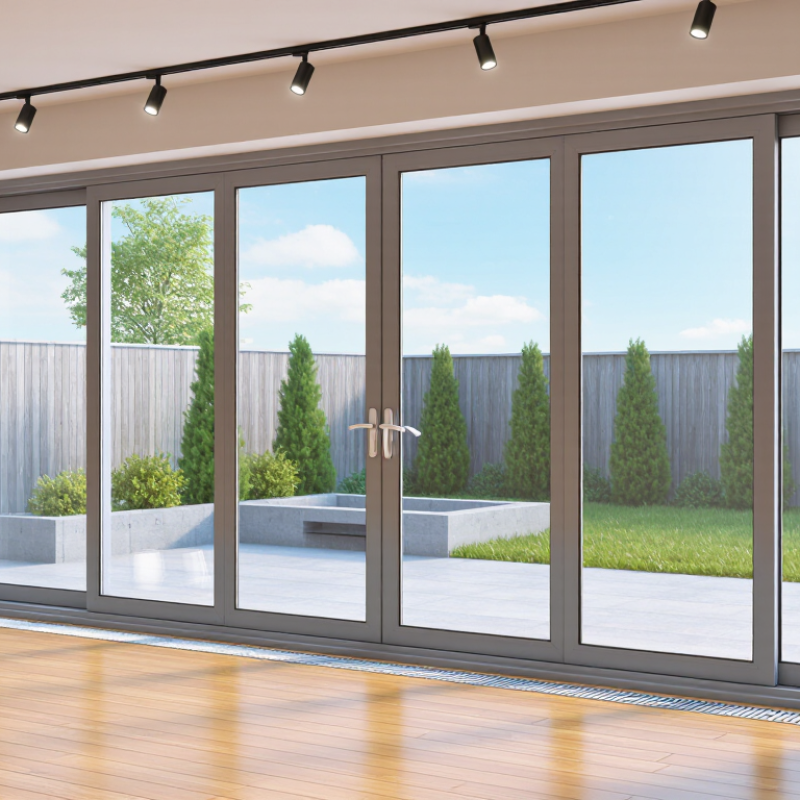
10 Tips for Buying Aluminium Sliding Doors?

Define Your Doorway Needs and Space Requirements

10 Tips for Buying Aluminium Sliding Doors: Define Your Doorway Needs and Space Requirements

Before choosing an aluminium sliding door, study how the opening works in daily life. Measure the width and height at three points, because walls and floors are rarely perfectly level. Record the finished floor height, wall thickness, and available space beside the opening. A door panel needs somewhere to park. Furniture, radiators, curtains, and light switches can block that area.

Think about movement, not only appearance. Will people carry groceries through the doorway? Will a wheelchair, pram, or large table need to pass? A wider clear opening may be more valuable than extra glass. Check whether the panels slide left, right, or both ways. The track should not create a trip hazard, especially near an active walkway. Ask a qualified installer to verify structural support before ordering.

I once measured only the visible opening and missed a deep skirting board. The planned panel could not slide fully aside. That mistake taught me to inspect every edge, corner, and obstruction. Leave room for handles and cleaning access. Consider the indoor and outdoor floor levels, too. Poorly planned transitions can collect water or feel awkward underfoot. Your measurements should include opening width, panel direction, stacking space, threshold height, and nearby obstacles. Sketching the room can reveal problems that a tape measure misses.

Compare Aluminium Grades, Profiles, and Structural Strength

10 Tips for Buying Aluminium Sliding Doors: Compare Aluminium Grades, Profiles, and Structural Strength

Do not judge aluminium by appearance alone. Grade 6063 is common for architectural profiles because it extrudes smoothly and accepts durable finishes. Grade 6061 offers higher strength, but it can be harder to form and may cost more. Ask for the alloy designation and temper, not simply “premium aluminium.” ASTM B221 covers extruded aluminium profiles, while EN 755-2 defines mechanical properties for many aluminium alloys. These standards give buyers something measurable.

Profile depth matters. A narrow frame may look elegant, yet wider profiles can resist bending across large openings. Check the wall thickness, reinforcement, sash span, and maximum panel weight. Structural calculations should consider wind pressure, glass weight, roller loads, and installation conditions. EN 12210 covers wind-load classification for windows and doors. Request test evidence, such as air leakage, water tightness, and operational cycling results. A smooth showroom sample proves little.

Thermal performance deserves attention. The U.S. Department of Energy reports that windows can represent about 25–30% of household heating and cooling energy use. A thermally broken profile can reduce heat transfer, especially beside cold floors or hot exterior walls. Inspect the polyamide barrier, corner joints, drainage paths, and glass specification. Stainless rollers are useful near humid or coastal environments, but they still need correct alignment. I would not trust vague strength claims. A certificate may cover one size, while your door is larger, heavier, or poorly supported. Ask for the tested configuration, profile drawings, and installation requirements before comparing prices.

Evaluate Glass Types, Energy Performance, and Weather Sealing

10 Tips for Buying Aluminium Sliding Doors

Glass selection affects comfort, safety, and daily energy use. Double glazing usually reduces heat transfer better than single glazing. Low-emissivity coatings can reflect indoor heat during colder months. In warm climates, lower solar heat gain may matter more. Ask for the glass U-value and solar heat gain coefficient. Do not judge performance by appearance alone. Clear glass may look attractive, yet it can create strong afternoon glare. Laminated glass can reduce noise and hold together after breakage, while toughened glass offers improved impact resistance. Confirm that the specification suits your local building requirements.

Energy performance depends on the complete door, not glass alone. Aluminium frames with thermal breaks can limit heat movement through the structure. Examine the spacer, frame joints, and track design. Small gaps matter. Weather sealing deserves equal attention. Look for continuous compression seals, properly aligned rollers, and drainage channels that do not collect leaves. Run your hand around the closed panel. Feel for uneven pressure. A simple hose test can reveal leaks, but it should be controlled rather than forceful.

Installation often decides whether good materials perform well. An experienced installer should check the opening for square, moisture damage, and movement before fitting the door. Request written performance data, maintenance guidance, and warranty conditions. Requirements vary by climate and regulation. Do not guess. One overlooked detail is the threshold height; a low threshold may improve access but can demand better drainage. I would also reconsider oversized panels, because their weight can make smooth operation harder over time.

10 Tips for Buying Aluminium Sliding Doors: Evaluate Glass Types, Energy Performance, and Weather Sealing

Typical centre-of-glass U-factors for common glazing options. Lower values indicate better insulation and reduced heat transfer. Actual whole-door performance also depends on the aluminium frame, spacer, installation quality, and weather sealing.

When comparing aluminium sliding doors, look for double or triple glazing with a low-emissivity coating, thermally improved frames, continuous weather seals, and independently tested whole-door U-values. The figures shown are representative industry values in W/m²·K and should be used for comparison rather than as a product certification.

Check Sliding Hardware, Security Features, and Ease of Use

10 Tips for Buying Aluminium Sliding Doors?

Check the sliding hardware before admiring the frame. Tip 1: Roll the door slowly and listen for grinding. Tip 2: Choose corrosion-resistant rollers for humid areas. Tip 3: Test the track with one hand. It should feel steady. Tip 4: Inspect the frame joints and drainage openings. Poor drainage can leave water near the interior floor. From site inspections, I have learned that a beautiful door can still hide weak hardware. That mistake is easy to make.

Security deserves practical testing. Tip 5: Check whether the locking points engage smoothly. Tip 6: Look for strong handles and anti-lift protection. Tip 7: Ask how the glass is secured within the frame. Tip 8: Confirm that the lock remains usable after repeated operation. Do not rely on appearance alone. A tight lock is helpful, but installation quality matters just as much. I once overlooked a slightly loose strike plate; it later needed adjustment. Small details matter.

Ease of use affects every morning. Tip 9: Slide the panel several times, including from different angles. Tip 10: Confirm that children and older users can operate the handle comfortably. Ask for maintenance instructions, adjustment limits, and clear warranty terms. Also verify the opening size on site, not only on paper. Measurements can be imperfect. That is why a trained installer should recheck them before fabrication. Pay attention to thermal performance, drainage, and ventilation requirements for your local conditions.

10 Tips for Buying Aluminium Sliding Doors? - Check Sliding Hardware, Security Features, and Ease of Use

No. Buying Dimension What to Check Practical Data or Benchmark Why It Matters
1 Aluminium Frame Quality Confirm that the frame uses corrosion-resistant aluminium suitable for the installation environment. Ask whether the finish is anodised or powder-coated and inspect corners for even coverage. Look for
Uniform finish, rigid profiles, clean joints, and no visible pitting, cracks, or coating defects.
A properly finished frame helps resist moisture, oxidation, scratching, and long-term surface deterioration.
2 Sliding Hardware Inspect the rollers, tracks, guides, handles, locks, and adjustment points. Ask whether worn rollers can be replaced without removing the entire frame. Prefer
Adjustable rollers with sealed or shielded bearings and a corrosion-resistant track.
High-quality hardware supports smooth movement and makes future maintenance more practical.
3 Ease of Operation Open and close the door several times. Test it from different positions and check whether the panels move smoothly without lifting, sticking, scraping, or excessive force. Test on site
The panel should travel steadily, stop securely, and remain aligned when partly open.
A door that operates easily is safer, more accessible, and less likely to suffer premature hardware wear.
4 Security Features Check the primary lock, internal handle, anti-lift protection, keeper plates, and the strength of the meeting stile. Confirm that the locked panels cannot be lifted from the track. Essential
Use a lockable handle with anti-lift measures and robust, correctly aligned locking points.
Sliding doors can be vulnerable at the track and meeting stile if the locking and anti-lift systems are inadequate.
5 Glazing Safety Ask what type of safety glass is installed and verify that the glass thickness and specification match the door size and local building requirements. Common options
Tempered or laminated safety glass; larger panels generally require engineering review and suitable structural support.
Safety glazing reduces the risk of dangerous sharp shards and improves protection against accidental impact.
6 Weather Sealing Examine gaskets, brush seals, corner joints, drainage openings, and the threshold. Ask how water is directed away from the frame. Check
Continuous seals, clear drainage paths, tight corners, and a threshold appropriate for the exposure level.
Effective sealing helps limit air leakage, rain penetration, dust entry, and water accumulation around the opening.
7 Thermal Performance Compare the complete door system rather than the glass alone. Check the glazing type, frame design, spacer, seals, and published U-value or energy data. Compare systems
A lower whole-door U-value generally indicates better insulation, but results depend on size, glass area, and installation.
Better thermal performance can improve indoor comfort and reduce heat transfer through the large glazed opening.
8 Panel Size and Weight Confirm the maximum panel width, height, glass weight, and total operating load supported by the roller and track system. Verify before ordering
Panel limits must be calculated from the actual glass specification, frame dimensions, and hardware capacity.
Oversized or overweight panels may be difficult to operate and can cause deflection, misalignment, or hardware failure.
9 Threshold and Accessibility Measure the threshold height and check for trip edges, drainage details, and compatibility with the finished floor level. Consider mobility and cleaning needs. Plan carefully
Use a low or flush threshold where suitable, while retaining adequate weather protection for the site conditions.
A well-planned threshold improves access, reduces trip hazards, and helps the door integrate neatly with the floor finish.
10 Installation and Maintenance Request installation instructions, warranty terms, adjustment procedures, drainage requirements, and recommended cleaning products. Confirm that the opening is square and level. Routine care
Keep tracks free of grit, clean drainage channels, inspect seals, and avoid abrasive cleaners or drilling into the frame.
Correct installation and regular care are essential for reliable alignment, smooth operation, weather resistance, and service life.

Note: Performance values and installation requirements vary according to door dimensions, glazing selection, site exposure, local regulations, and the complete tested system. Always confirm the final specification with a qualified installer.

Confirm Installation Standards, Warranty, and Long-Term Maintenance

Before buying aluminium sliding doors, confirm the installation standard required in your area. Requirements may cover wind resistance, safety glazing, drainage, insulation, and emergency access. Ask the installer which standard applies and request written evidence of compliance. The opening must be square, level, and properly supported. Even a small slope can make the door drag or leave gaps. I have seen attractive doors perform poorly because the sill was installed without enough drainage space. It was a basic mistake, but not an inexpensive one.

Read the warranty before paying a deposit. Check how long it covers the frame, glass, rollers, seals, and installation labor. Some warranties exclude coastal corrosion, poor cleaning, or adjustments after installation. Ask who handles service if the installer stops trading. Get every promise in writing. Plan maintenance from the beginning. Keep tracks free from grit, clean drainage holes, and inspect seals twice a year. Rollers may need adjustment after heavy use. Do not force a stiff panel. That can damage the hardware and frame. Use mild soap, clean water, and a soft cloth; abrasive products can mark the finish. Maintenance advice often sounds obvious, yet it is easy to neglect during busy months. A written service record can help identify repeated problems and support a warranty claim.

FAQS

Why is double glazing often preferred for aluminium sliding doors?

It usually reduces heat transfer better than single glazing. This can improve indoor comfort and lower daily energy use.

What glass performance details should I request?

Ask for the glass U-value and solar heat gain coefficient. Appearance alone cannot reveal thermal performance.

Which glass type may reduce noise and improve safety?

Laminated glass can reduce outside noise and remain together after breakage. Toughened glass offers stronger impact resistance.

How can I reduce afternoon glare?

Consider glass with lower solar heat gain in warm, sunny climates. Clear glass may create intense afternoon glare.

What frame and sealing features deserve inspection?

Look for thermal breaks, continuous compression seals, aligned rollers, and drainage channels. Small gaps matter.

How can I check for air or water leaks?

Run your hand around the closed panel and feel for uneven pressure. A controlled hose test may reveal leaks.

Why does installation quality affect door performance?

The opening should be square, level, dry, and properly supported. Even a slight slope can make the panel drag.

What warranty and maintenance details should I confirm?

Check coverage for the frame, glass, rollers, seals, and installation labor. Clean tracks and drainage holes regularly with mild soap and water. Do not force a stiff panel. I would reconsider oversized panels because their weight may reduce smooth operation over time.

Conclusion

Choosing Aluminium Sliding Doors begins with understanding your doorway dimensions, room layout, ventilation needs, and desired level of natural light. Accurate measurements and a clear idea of how the doors will be used can help prevent fitting problems and improve everyday comfort. It is also important to compare aluminium grades, frame profiles, and structural strength, since these factors influence durability, appearance, and resistance to movement or load.

Pay close attention to glass options, energy performance, drainage, and weather sealing to support indoor comfort in different conditions. Smooth, reliable sliding hardware, effective locks, and suitable security features can make the doors safer and easier to operate. Before purchasing, confirm that installation will follow appropriate standards and that the provider offers clear warranty coverage. Finally, ask about cleaning, lubrication, seal replacement, and other maintenance requirements so the doors remain attractive, secure, and functional over the long term.

Aria

Aria

Aria is a dedicated marketing professional with a deep passion for innovative strategies and a keen understanding of our company's product offerings. With a wealth of experience in the industry, Aria excels at crafting engaging content that highlights the unique features and benefits of our......